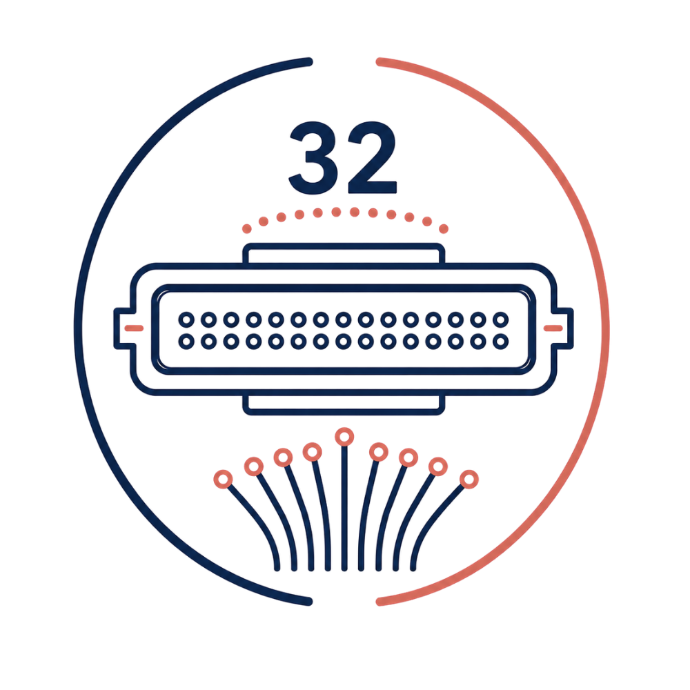
Up to 32 fibers per connector
Configurations of 8, 12, 16, 24 and up to 32 fibers to maximize connection density.
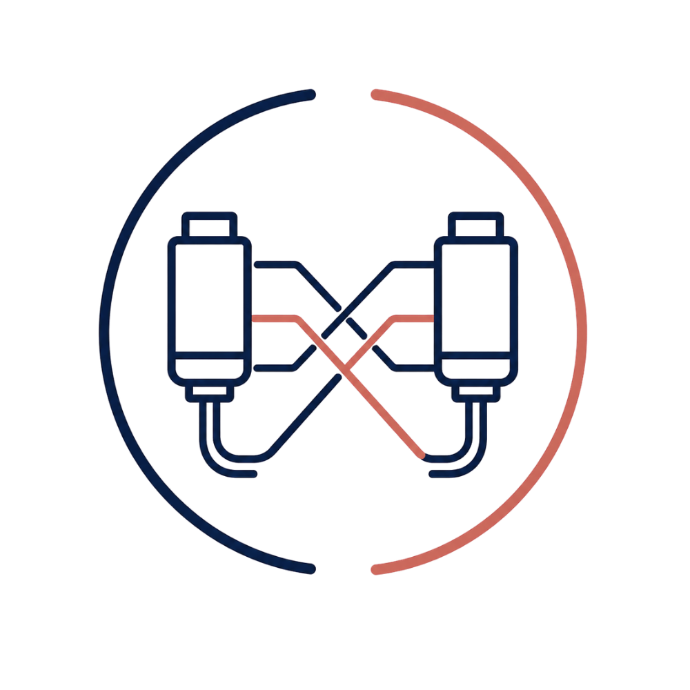
Polarities A, B and C
Compatibility with major polarity schemes to adapt to any network architecture.
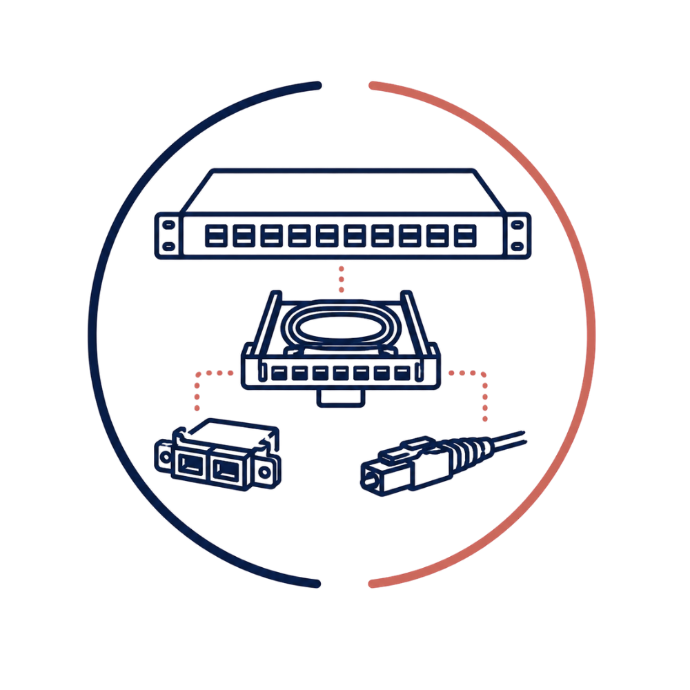
Modular ecosystem
A complete solution with fully compatible panels, cassettes, adapters, hoses and accessories.

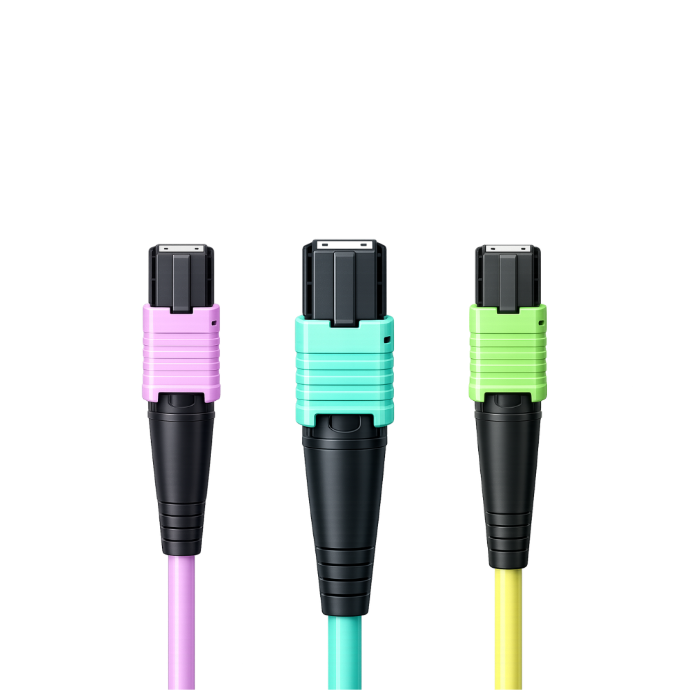
OS2, OM3, OM4 and OM5 configurations
Available for single-mode and multimode fiber according to the needs of each project.
Ready for 40G, 100G, 200G, 400G
Designed to respond to the demands of today's high-capacity networks.

Specialized technical advice
We help you define the most appropriate MPO configuration for your infrastructure.
Today's networks need a new way to connect
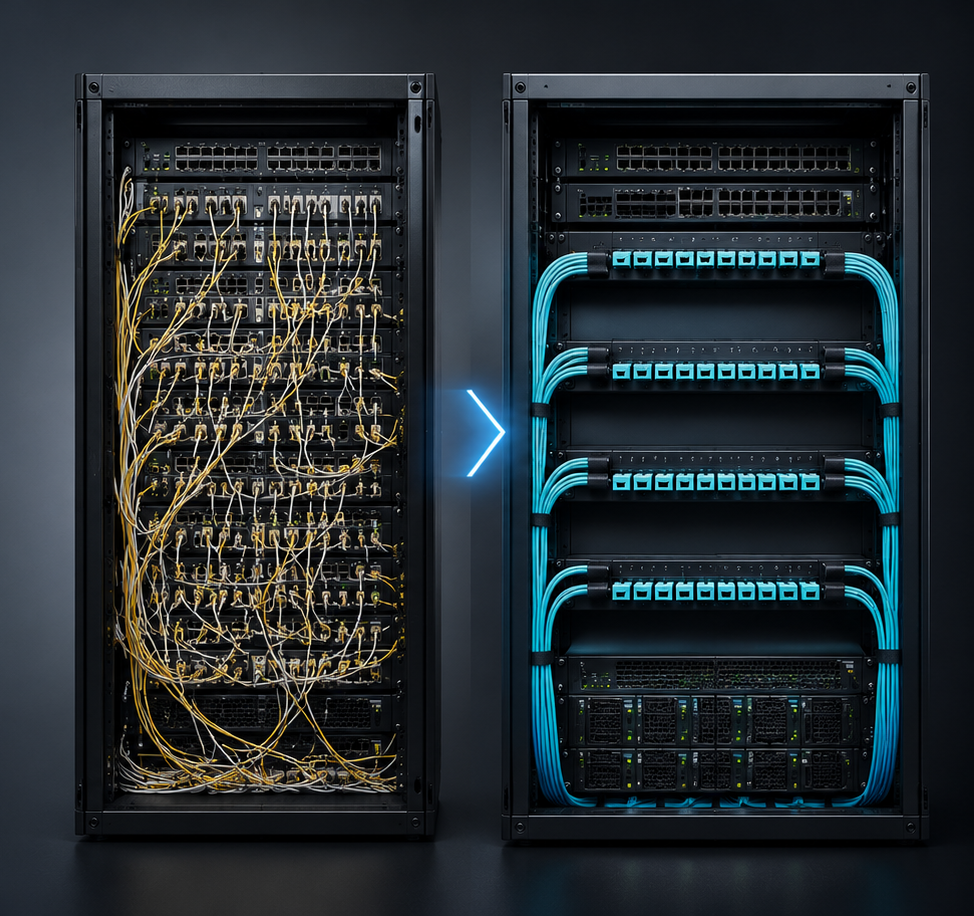
The growth of data traffic, virtualization, artificial intelligence and high-speed applications are transforming the way fiber optic infrastructures are designed. Traditional solutions based on duplex connections take up more space, increase cabling complexity and make future expansions difficult.
MPO solutions allow multiple fibers to be concentrated in a single connector, simplifying deployment, optimizing available space and facilitating the evolution of the network towards greater transmission capacities.
What is an MPO solution?
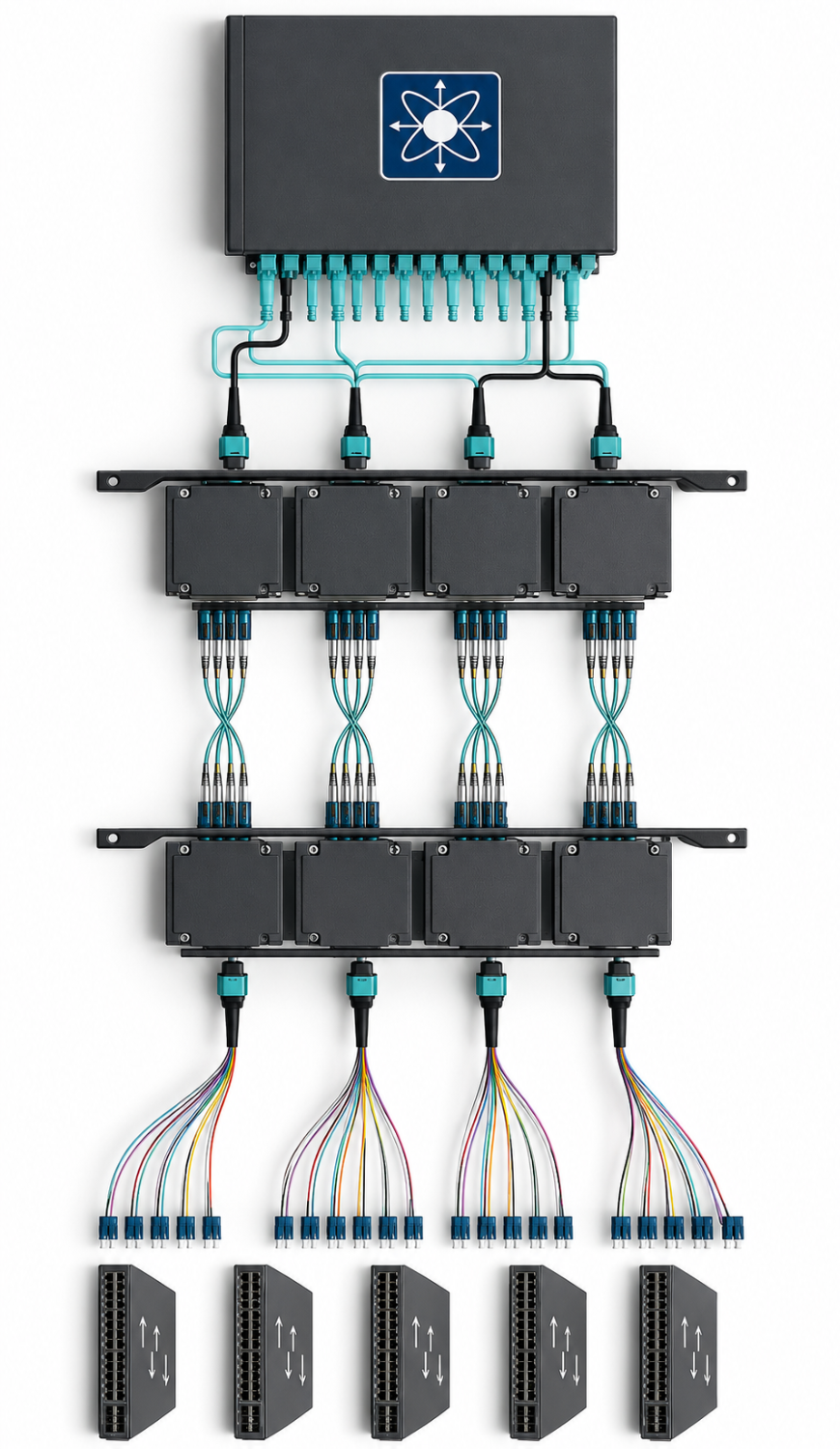
An MPO solution is not made up of a single product, but rather a set of components designed to work in an integrated manner. From the optical backbone to the final connection with active equipment, each element fulfills a specific function to achieve a more compact, organized and prepared infrastructure for future expansions.
SWITCH CORE
The core of the infrastructure where the links start from MPO trunks.
↓
TRUNK MPO
High-density trunk links that They carry multiple fibers in a single cable.
↓
MPO PANEL
Distribution and organization point of optical cabling.
↓
MPO CASSETTES
They convert MPO connections into LC interfaces depending on the application.
↓
BREAKOUTS AND FANOUTS
They convert MPO connections into LC interfaces depending on the application.
↓
SWITCHES AND SERVERS
Active equipment connected using LC patch cords for an efficient, scalable and future-proof infrastructure.
All components. Fully compatible.
Designed to function as a single system, guaranteeing performance, modularity and ease of expansion in any high-density optical infrastructure.
Our MPO solution
From high-density trunk links to the final connection to active equipment. GTLAN offers a complete ecosystem of MPO solutions designed for scalable, orderly and high-performance infrastructures.
MPO Patch Cords and Breakouts
High-density links that connect the optical backbone with active equipment, guaranteeing reliable transmission and efficient distribution of fibers.
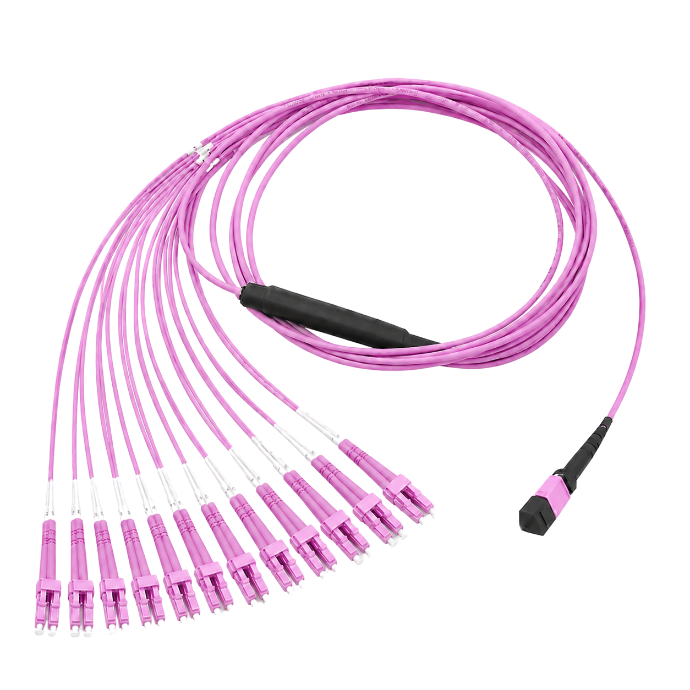
MPO Fanouts
They allow the transition from an MPO connector to individual shielded fibers, facilitating terminations, fusions and application-specific connections.
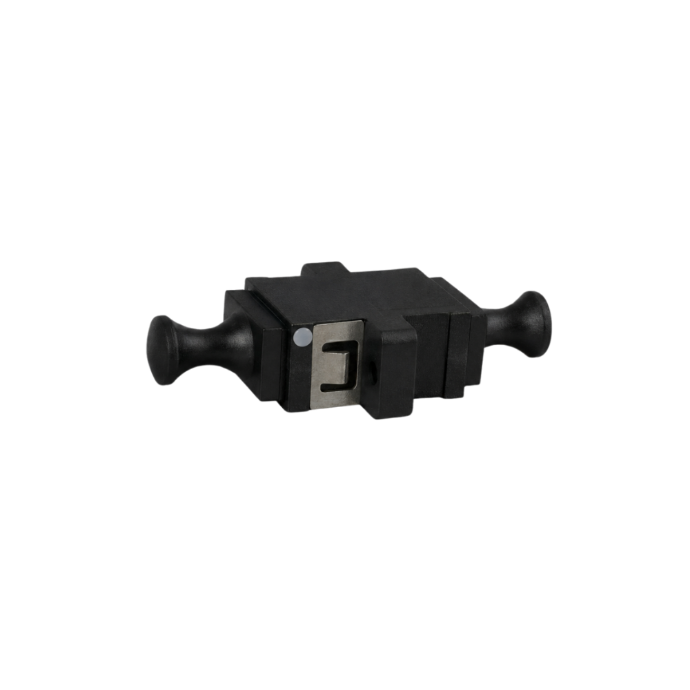
MPO Adapters
They ensure precise alignment between MPO connectors, maintaining optical continuity and guaranteeing stable, high-performance connections.
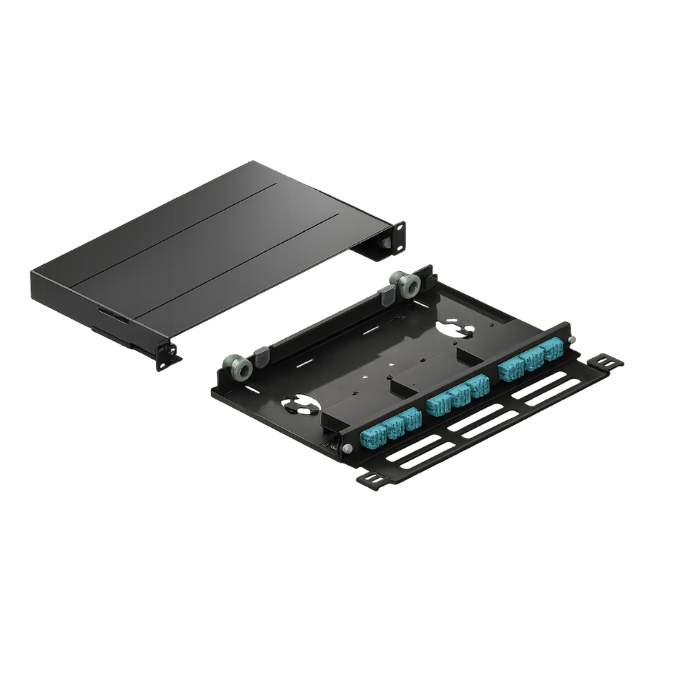
MPO Trays
Designed to house and organize modules, cassettes and adapters, providing a modular, organized infrastructure ready for growth.
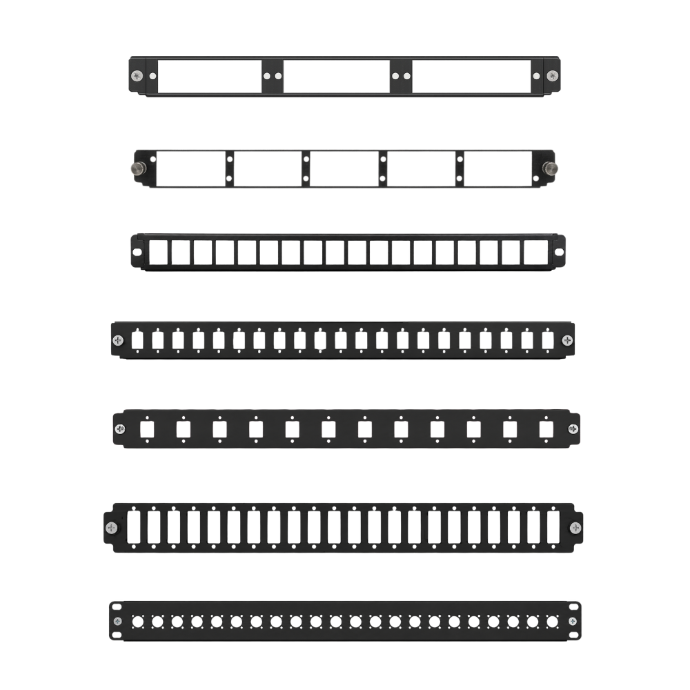
MPO Panels
They centralize, distribute and protect high-density optical cabling, facilitating management, maintenance and future expansions.
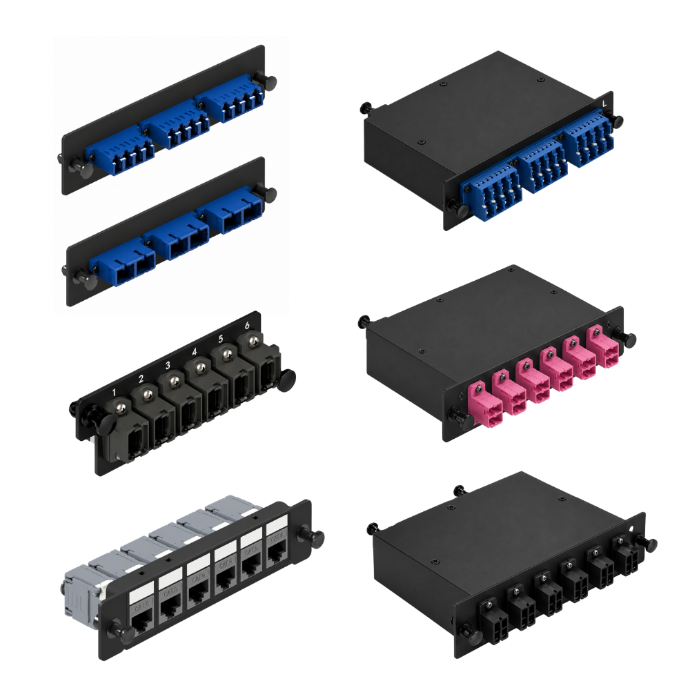
MPO Cassettes and Plates
Distribution solutions that convert MPO links into LC interfaces or adapt connectivity according to the needs of each installation.
Solutions adapted to different environments
Each infrastructure has different requirements. The Gtlan MPO ecosystem allows you to design solutions adapted to different environments, guaranteeing performance, scalability and ease of maintenance.

Data Centers
Design high-density optical backbones prepared to support the continuous growth of data traffic, optimizing available space and facilitating future expansions.
AI and HPC infrastructures
Connect high-performance computing clusters using an optical infrastructure ready for applications that require high bandwidth and low latency.
Telecommunications operators
Implement scalable and easy-to-maintain optical networks, reducing cabling complexity and facilitating infrastructure evolution.
Campus and corporate networks
Centralize the wiring of buildings and corporate headquarters through a modular solution that simplifies management and allows growth without redesigning the infrastructure.
Everything you should consider before designing an MPO infrastructure
The architecture will depend on the type of installation, the number of connections planned, the growth strategy and the level of modularity desired. A solution based on cassettes offers greater flexibility for future expansions, while an architecture with direct MPO connections may be appropriate in very specific scenarios where the aim is to minimize losses and reduce the number of intermediate elements.
The cassettes allow you to convert MPO connections into LC interfaces in an orderly and modular way, facilitating maintenance and future expansions. Direct connections can be an alternative in certain high-density architectures where this conversion is not necessary. The choice will depend on the overall design of the infrastructure and the ease of maintenance that is desired.
The selection of fiber type depends on factors such as transmission speed, link distance and the expected evolution of the infrastructure. Each project requires a specific analysis to guarantee the best balance between performance, growth capacity and implementation cost.
Polarity is one of the most important aspects in the design of an MPO infrastructure. Choosing correctly between Type A, B or C guarantees that all fibers maintain the appropriate correspondence between transmission and reception, avoiding incidents during start-up or future expansions.
Correctly designing the backbone from the beginning allows the infrastructure to evolve without the need to replace the main cabling. Adequate planning facilitates future migrations to higher capacity architectures while maintaining the investment made.
Each additional connection introduces a small optical loss. Infrastructure design must balance modularity, maintainability, and loss budget to ensure overall link performance.
An MPO infrastructure must be designed as a complete system. Compatibility between cables, panels, adapters, cassettes and other components is essential to ensure correct operation and facilitate future expansions.
Yes. In most projects it is possible to incorporate MPO solutions progressively, coexisting with already installed LC infrastructures and allowing an orderly migration without completely replacing the existing cabling.